Description
Ornemental ivy – Hedera helix ‘Frodo’
In a nutshell
Ornamental ivy, Hedera helix ‘Frodo’, is distinguished by its stiff and thick stems.
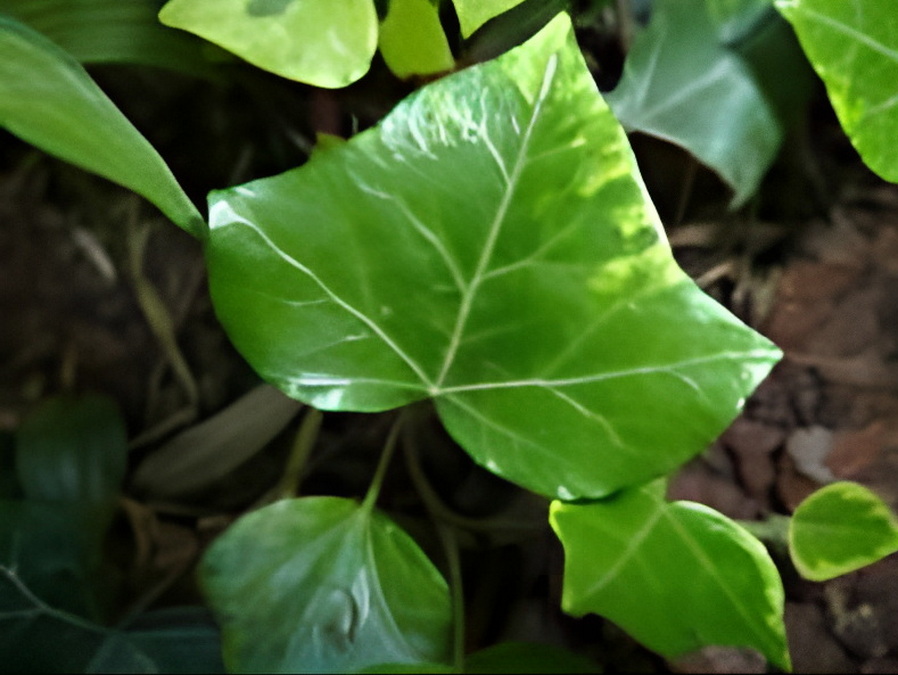
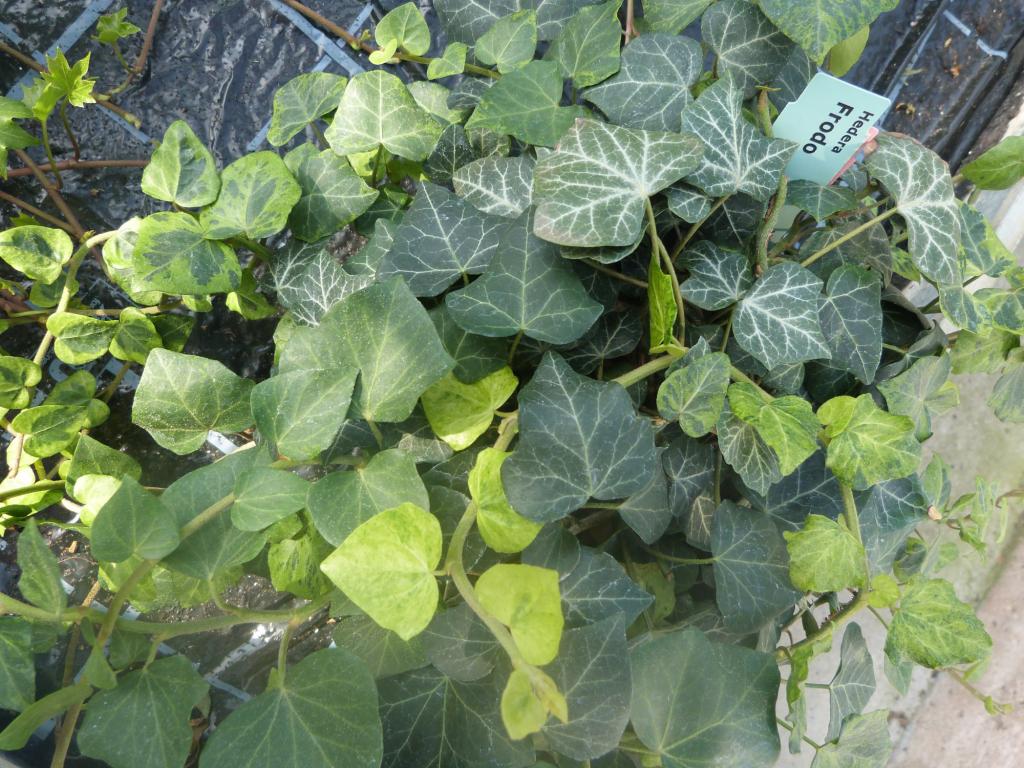
The leaves are unlobed, triangular to heart-shaped. Young shoots are light green to yellow. Older leaves are dark green, irregularly edged with lighter green.
This is a semi-adult variety, uncommon, to be used in pots, or as ground cover, for all exposures.
History
This cultivar was discovered in 2003 by the Volker family in a park in Fürstenfeldbruck, Germany. It is named after their youngest son.
Technical leaflet - Hedera helix 'Frodo'
Botanical information
- Botanical information
- Family: Araliaceae
- Genus: Hedera
- Species: helix
- Cultivar: ‘Frodo’
- Pierot classification: variegated ivy
- Leaf stage: semi-adult
- Origin of the species: Europe, from Spain to Norway, but little on the Atlantic coast.
- Origin of the cultivar: discovered in 2003 by the Volker family in a park in Fürstenfeldbruck, Germany.
Description of Hedera helix 'Frodo'
- hape: stocky
- Number of lobes: generally unlobed
- Leaf length: 3cm
- Leaf width: 3 cm
- Leaf colour: dark green with light green spots
- Leaf colour variations: young shoots are yellow-green
- Vein colour: grey-green
- Stem and petiole colour: greenish-brown
- Petiole length: 1 to 3 cm
- Ramification: well-branched
- Mat thickness; medium
- Internodes: 2 to 3 cm
- Hairs: stellar, 3 to 5 branches
Tips for planting, growing and maintaining Hedera helix 'Frodo'
- Exposure: shade, partial shade, sun
- Hardyness: -15°C
- Soil moisture: fresh soil
- Soil pH: neutral or calcareous
- Soil type: all
- Soil richness: ordinary or humus-rich
- Use: ground cover, pots, planters
- Development: medium
- Pruning: once a year
- Pests: very rare (red spiders, scale insects)
- Diseases: very rare (leaf spots)
A page from my little ivy encyclopedia
The question of circumstance...
What is a semi-adult ivy?
Ivy, in its development, successively goes through 3 stages.
1 – initially, it crawls on the ground and forms adventitious roots that allow it to crawl further and further, thus forming an evergreen carpet.
2 – when it encounters a support, it begins to climb. Instead of adventitious roots, it forms crampons that allow it to climb higher and higher.
3 – when it sees enough light, it then enters its third stage, called the adult stage. It now produces horizontal branches, a bit like a shrub. In autumn, it flowers in the form of greenish umbels that are very popular with pollinating or foraging insects. These flowers give rise to berries that will very gradually mature during the winter and feed the birds.
Semi-adult ivy has characteristics of both juvenile ivy and adult ivy. For example, it no longer has lobed leaves, but oval leaves (like adult ivy), but not yet flowers and fruits (like juvenile ivy).
Ivy in literature
“Ivy, indifferent to time, covered the walls, binding them to an immortal memory.”


Reviews
There are no reviews yet.